discuss how globalization impacts human health and what factors contribute to these changes
Climatic change and Human Health
Introduction
- John Balbus
National Institutes of Health - Allison R. Crimmins
U.South. Environmental Protection Agency - Janet L. Chance
U.Due south. Ecology Protection Bureau
- David R. Easterling
National Oceanic and Atmospheric Assistants - Kenneth Due east. Kunkel
Cooperative Institute for Climate and Satellites - NC - Shubhayu Saha
Centers for Disease Control and Prevention - Marcus C. Sarofim
U.S. Ecology Protection Agency
Human
Given that the impacts of climate change are projected to increase over the adjacent century, certain existing health threats will intensify and new wellness threats may sally. Connecting our agreement of how climate is changing with an agreement of how those changes may bear on human health can inform decisions well-nigh mitigating (reducing) the amount of time to come climate change, suggest priorities for protecting public wellness, and assist identify enquiry needs.
i.1 Our Changing Climate
Observed Climatic change
The fact that the Earth has warmed over the concluding century is unequivocal. Multiple observations of air and ocean temperatures, sea level, and snow and ice accept shown these changes to be unprecedented over decades to millennia. Human influence has been the dominant cause of this observed warming.1 The 2014 U.S. National Climate Assessment (2014
The concepts of climate and weather are often confused. Weather conditionis the country of the temper at whatever given time and place. Atmospheric condition patterns vary greatly from year to year and from region to region. Familiar aspects of weather condition include temperature, precipitation, clouds, and wind that people experience throughout the form of a twenty-four hours. Astringent weather weather condition include hurricanes, tornadoes, blizzards, and droughts. Climateis the average weather conditions that persist over multiple decades or longer. While the conditions tin alter in minutes or hours, identifying a change in climate has required observations over a time catamenia of decades to centuries or longer. Climate change encompasses both increases and decreases in temperature as well as shifts in precipitation, changing risks of certain types of severe conditions events, and changes to other features of the climate system.
Figure 1.i: Major U.S. Climate Trends
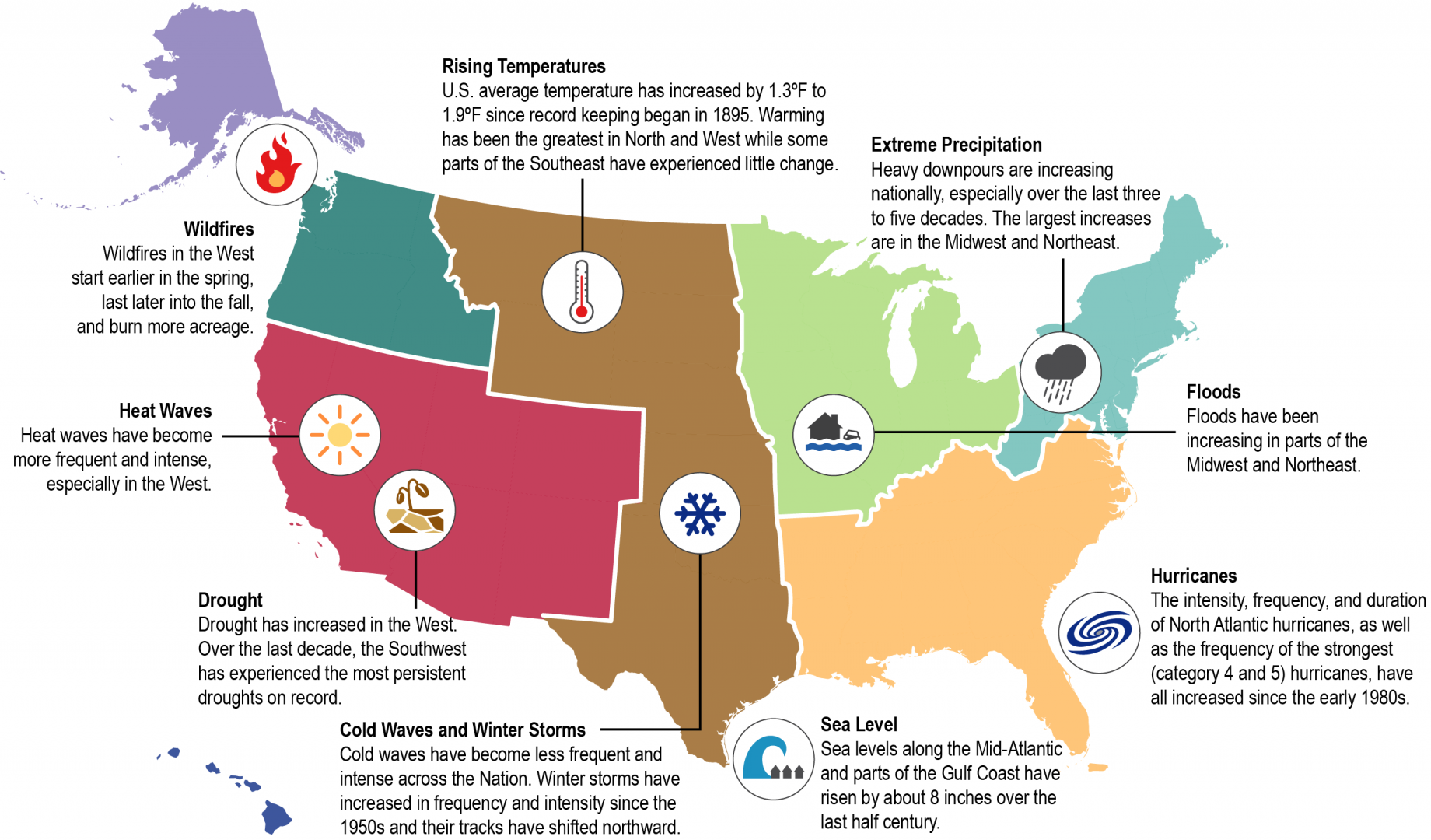
Major U.Due south. national and regional
trends. Shaded areas are the U.S. regions defined in the 2014
.2 , 4
Observed changes in climate and atmospheric condition differ at local and regional scales (Figure 1.1). Some climate and weather changes already observed in the U.s. include:2 , 3
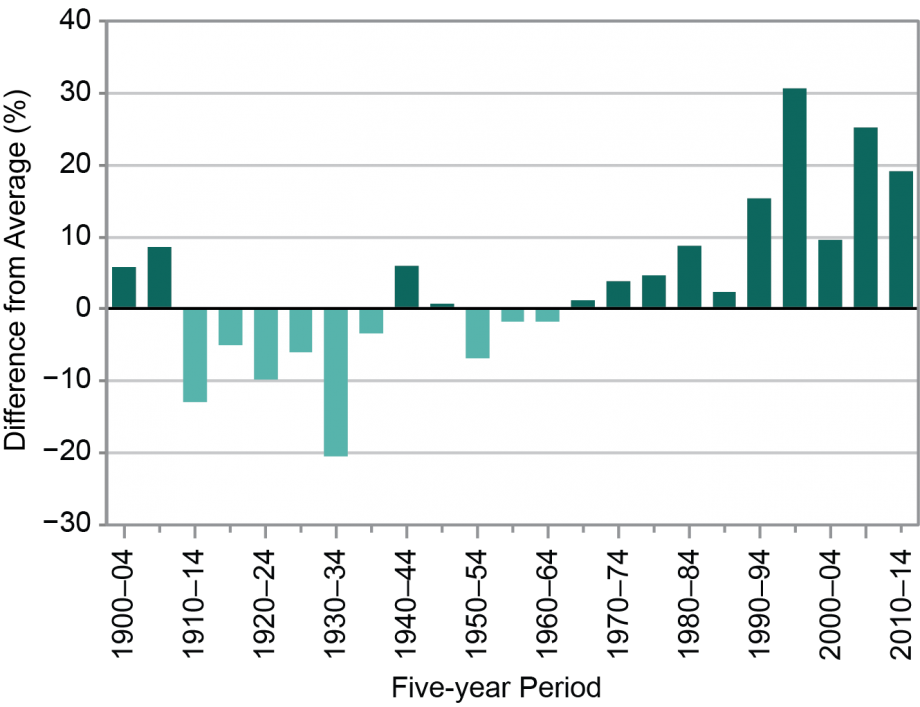
Effigy 1.2: Change in Number of Farthermost Precipitation Events
VIEW
Fourth dimension series of five-year averages of the number of extreme 2-mean solar day duration precipitation events, averaged over the United States from 1900 to 2014. The number is expressed equally the per centum difference from the average for the entire period. This is based on 726 stations that have precipitation data for at to the lowest degree xc% of the days in the menstruum. An result is considered extreme if the atmospheric precipitation corporeality exceeds a threshold for a once-per-year recurrence. (Figure source: adjusted from Mellilo et al. 2014)2
- U.S. average temperature has increased past 1.3°F to 1.9°F since recordkeeping began in 1895; near of this increase has occurred since about 1970. The get-go decade of the 2000s (2000–2009) was the warmest on record throughout the United States.
- Average U.Southward. atmospheric precipitation has increased since 1900, simply some areas have experienced increases greater than the national average, and some areas take experienced decreases.
- Heavy downpours are increasing nationally, especially over the last three to v decades. The largest increases are in the Midwest and Northeast, where floods have too been increasing. Figure 1.ii shows how the annual number of heavy downpours, divers every bit farthermost two-day atmospheric precipitation events, for the contiguous United States has increased, particularly betwixt the 1950s and the 2000s.
-
Drought has increased in the West. Over the last decade, the Southwest has experienced the most persistent droughts since record keeping began in 1895.four Changes in precipitation and runoff, combined with changes in consumption and withdrawal, accept reduced surface and groundwater supplies in many areas. - There have been changes in some other types of extreme weather events over the final several decades. Rut waves have become more frequent and intense, peculiarly in the Westward. Cold waves have become less frequent and intense beyond the nation.
- The intensity, frequency, and duration of North Atlantic hurricanes, equally well as the frequency of the strongest (category 4 and v) hurricanes, have all increased since the early 1980s. The relative contributions of human and natural causes to these increases remain uncertain.
Projected Climate change
Projections of future climate conditions are based on results from climate models—sophisticated calculator programs that simulate the behavior of the Earth's climate organisation. These climate models are used to project how the climate system is expected to change under different possible scenarios. These scenarios describe future changes in atmospheric greenhouse gas concentrations,
Figure i.3: Projected Changes in Temperature and Precipitation by Mid-Century
Interact with the Figure Below
Projected changes in almanac boilerplate temperature (left) and precipitation (right) for 2021–2050 and 2041–2070 with respect to the average for 1971–2000 for the RCP6.0
. The RCP6.0 pathway projects an average global temperature increment of v.ii°F in 2100 over the 1901–1960 global average temperature (the RCPs are described in more item in Appendix i: Technical Back up Document). Temperature increases in the The states for this scenario are in the 2°F to 3°F range for 2021 to 2050 and ii°F to 4°F for 2041 to 2070. This means that the increment in temperature projected in the The states over the adjacent 50 years under this scenario would be larger than the 1°F to 2°F increment in temperature that has already been observed over the previous century. Precipitation is projected to subtract in the Southwest and increase in the Northeast. These projected changes are statistically pregnant (95% conviction) in pocket-size portions of the Northeast, as indicated by the hatching. (Figure source: adapted from Sunday et al. 2015) vii
Some of the projected changes in climate in the Usa as described in the 2014 NCA are listed beneath:two , 3
- Temperatures in the Us are expected to keep to rise. This temperature rise has non been, and volition non be, compatible across the land or over time (Effigy 1.3).
- Increases are also projected for farthermost temperature conditions. The temperature of both the hottest day and coldest night of the year are projected to increase (Figure i.four).
- More wintertime and jump precipitation is projected for the northern United States, and less for the Southwest, over this century (Figure i.3).
- Increases in the frequency and intensity of extreme atmospheric precipitation events are projected for all U.Due south. areas (Effigy 1.iv).
- Short-term (seasonal or shorter) droughts are expected to intensify in well-nigh U.S. regions. Longer-term droughts are expected to intensify in large areas of the Southwest, the southern Dandy Plains, and the Southeast. Trends in reduced surface and groundwater supplies in many areas are expected to continue, increasing the likelihood of water shortages for many uses.
- Heat waves are projected to become more intense, and cold waves less intense, everywhere in the United States.
- Hurricane-associated storm intensity and rainfall rates are projected to increase as the climate continues to warm.
Figure i.four: Projected Changes in the Hottest/Coldest and Wettest/Driest Twenty-four hour period of the Yr
Interact with the Figure Beneath
Projected changes in several
variables for 2046–2065 with respect to the 1981–2000 boilerplate for the RCP6.0
. These include the coldest dark of the year and the hottest day of the yr. By the centre of this century, the coldest nighttime of the year is projected to warm past 6°F to 10°F over most of the country, with slightly smaller changes in the south. The warmest solar day of the yr is projected to be iv°F to 6°F warmer in most areas. Too shown above are projections of the wettest 24-hour interval of the twelvemonth and the annual longest consecutive dry day spell. Extreme precipitation is projected to increase, with an average change of 5% to xv% in the atmospheric precipitation falling on the wettest mean solar day of the year. The length of the annual longest dry out spell is projected to increase in near areas, but these changes are pocket-size: less than two days in near areas. (Figure source: adjusted from Sun et al. 2015)7
1.2 How Does Climatic change Affect Health?
The influences of
A useful approach to understand how climatic change affects health is to consider specific
Whether or not a person is exposed to a health threat or suffers disease or other adverse wellness outcomes from that exposure depends on a circuitous prepare of
- Exposure is contact between a person and one or more biological, psychosocial, chemical, or physical stressors, including stressors affected by climate change. Contact may occur in a single instance or repeatedly over time, and may occur in i location or over a wider geographic area.
- Sensitivity is the degree to which people or communities are afflicted, either adversely or beneficially, past
climate variability or change. -
Adaptive capacity is the power of communities, institutions, or people to adjust to potential hazards, to take reward of opportunities, or to respond to consequences. A related term, resilience, is the power to set and plan for, absorb, recover from, and more successfully arrange to agin events.
(definitions adapted from
Vulnerability, and the three components of vulnerability, are factors that operate at multiple levels, from the private and community to the country level, and affect all people to some degree.9 For an individual, these factors include human behavioral choices and the caste to which that person is vulnerable based on his or her level of exposure, sensitivity, and adaptive capacity. Vulnerability is also influenced past
At a larger community or societal scale, health outcomes are strongly influenced by adaptive capacity factors, including those related to the natural and built environments (for example, the state of
The three components of vulnerability (exposure, sensitivity, and adaptive capacity) are associated with social and
Figure 1.5: Climate change and Wellness
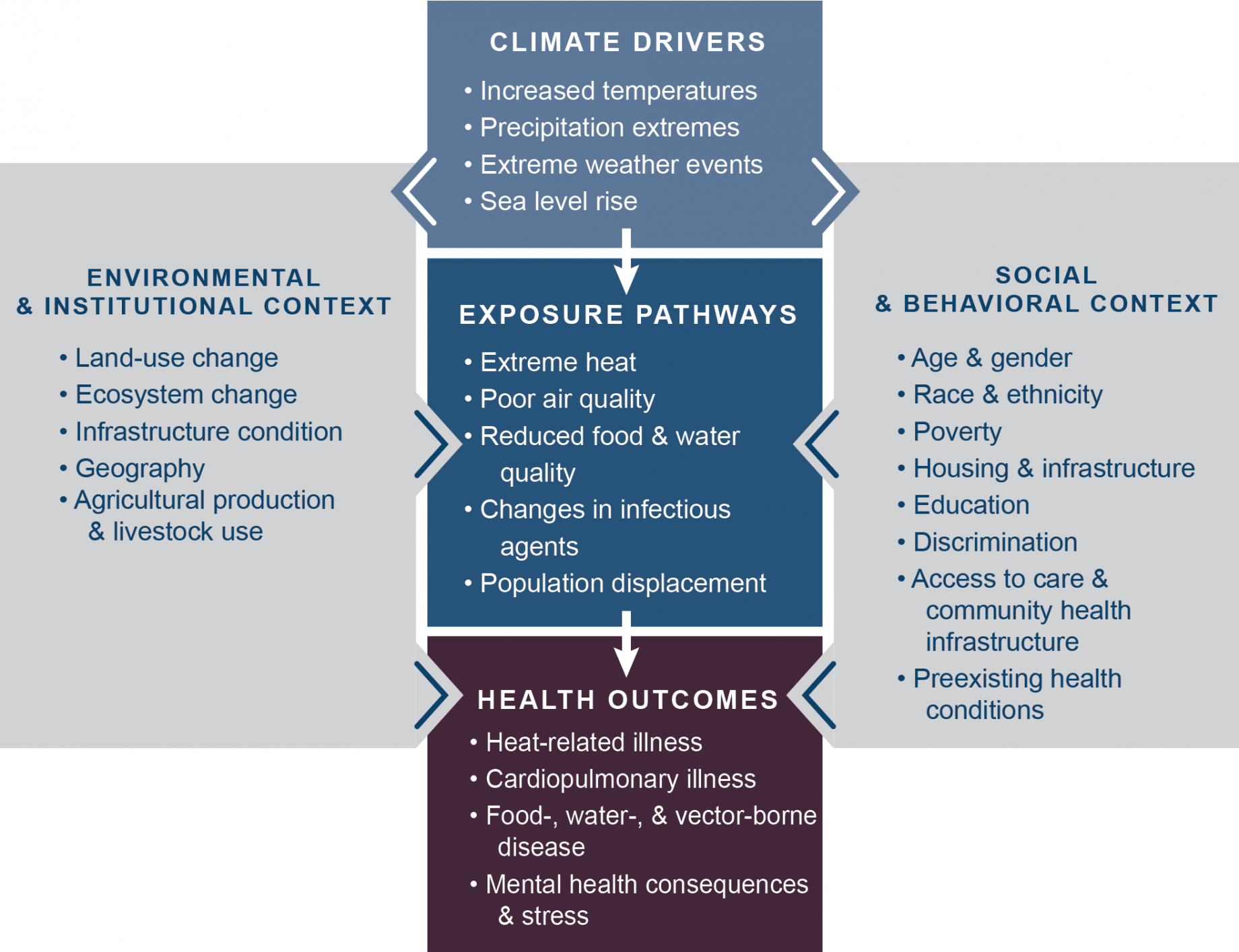
Conceptual diagram illustrating the
pathways by which
affects human
. Exposure pathways be within the context of other factors that positively or negatively influence health outcomes (gray side boxes). Fundamental factors that influence
for individuals are shown in the correct box, and include
and behavioral choices. Fundamental factors that influence vulnerability at larger scales, such equally natural and congenital environments, governance and management, and institutions, are shown in the left box. All of these influencing factors can bear on an private'due south or a community's vulnerability through changes in exposure,
, and
and may too be affected by climate change.
We are already experiencing changes in the frequency, severity, and even the location of some weather and climate phenomena, including extreme temperatures, heavy rains and droughts, and some other kinds of severe atmospheric condition, and these changes are projected to keep. This means that areas already experiencing health-threatening weather and climate phenomena, such as severe heat or hurricanes, are likely to experience worsening impacts, such every bit even college temperatures and increased tempest intensity, rainfall rates, and
Climate change can therefore bear upon man health in two main ways: start, by changing the severity or frequency of health problems that are already afflicted by climate or weather factors; and second, past creating unprecedented or unanticipated health issues or health threats in places where they have not previously occurred.
1.iii Our Irresolute Health
In order to empathize how
Demographic and Socioeconomic Trends
The United States is in the midst of several meaning demographic changes: the population is crumbling, growing in number, becoming more ethnically diverse, and demonstrating greater disparities between the wealthy and the poor. Immigration is having a major influence on both the size and age distribution of the population.15 Each of these demographic trends has implications for climate change related human wellness impacts (see Ch. 9: Populations of Business organisation). Some of these trends and projections are summarized beneath:
Trends in population growth
- The total U.Due south. population has more than doubled since 1950, from 151,325,798 persons in 1950 to 308,745,538 in 2010.16
- The Census Bureau projects that the U.S. population volition grow to nigh 400 million by 2050 (from estimates of about 320 one thousand thousand in 2014).17
Trends in the elderly population
- The nation'south older adult population (ages 65 and older) volition nearly double in number from 2015 through 2050, from approximately 48 million to 88 million.xviii Of those 88 million older adults, a little under 19 million will be 85 years of age and older.xix
Trends in racial and indigenous diversity
- As the United States becomes more diverse, the amass minority population is projected to go the majority by 2042.18 The non-Hispanic or non-Latino White population will increase, but more slowly than other racial groups. Non-Hispanic Whites are projected to become a minority by 2050.twenty
- Projections for 2050 suggest that near 19% of the population will be immigrants, compared with 12% in 2005.xx
- The Hispanic population is projected to nearly double from 12.5% of the U.S. population in 2000 to 24.six% in 2050.21
Trends in economic disparity
- Income inequality rose and so stabilized during the last thirty years, and is projected to resume rising over the next 20 years, though at a somewhat slower overall rate that declines to near nil by 2035.22 For example, the Gini coefficient, a measure of income inequality, is estimated to have risen by 18% betwixt 1984 and 2000, and is projected to rise by an additional 17% for all workers between 2009 and 2035.22
- America's communities of color accept disproportionately higher poverty rates and lower income levels. While racial disparities in household wealth were higher in the late 1980s than at present, trends in more recent years have been toward greater inequality. The ratio of the median cyberspace household worth of White, non-Hispanic versus non-White or Hispanic households increased from 6.0 to 7.8 betwixt 2007 and 2013.23 In 2009, 25.eight% of non-Hispanic Blacks and 25.iii% of Hispanics had incomes beneath the poverty level as compared to 9.four% of non-Hispanic Whites and 12.v% of Asian Americans.24 In 2014, the median income level for a not-Hispanic Black household was approximately $35,000, $25,000 lower than a non-Hispanic White household.25
Population growth and migration in the United States may place more people at
Trends in Wellness Status
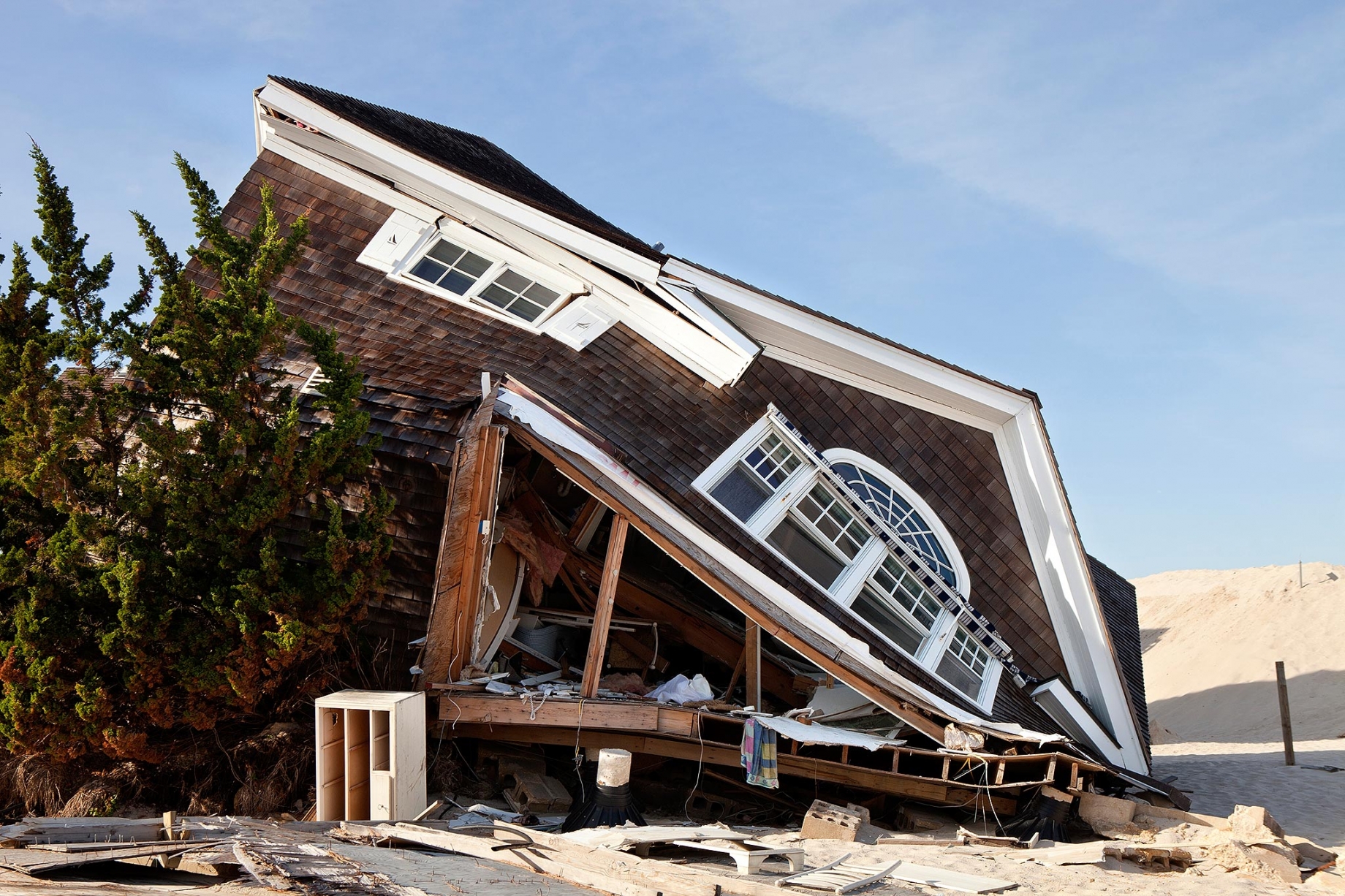
Tempest-damaged home after Hurricane Sandy © iStockPhoto. com/Aneese
Every bit a nation, trends in the population's health are mixed. Some major indicators of health, such equally life expectancy, are consistently improving, while others, such as rate and number of
Climatic change impacts to human health will human action on acme of these underlying trends. Some of these underlying health atmospheric condition can increase
Examples of health indicators that take been improving between 2000 and 2013 include the post-obit:
- Life expectancy at nascence increased from 76.eight to 78.viii years.30
- Expiry rates per 100,000 people from eye disease and cancer decreased from 257.6 to 169.8 and from 199.half-dozen to 163.2, respectively.30
- The percent of people over age eighteen who say they smoke decreased from 23.2% to 17.8%.30

© Monkey Business Images/Corbis
At the same time, some health trends related to the prevalence of
- The per centum of adult (xviii years and older) Americans describing their wellness as "poor or fair" increased from 8.9% in 2000 to ten.3% in 2012.30
- Prevalence of medico-diagnosed diabetes among adults aged xx and over increased from 5.two% in 1988-1994 to 8.4% in 2009-2012.30
- The prevalence of obesity among adults (aged twenty–74) increased past almost three-fold from 1960–1962 (13.four% of adults classified as obese) to 2009–2010 (36.1% of adults classified every bit obese).31
- In the past 30 years, obesity has more than than doubled in children and quadrupled in adolescents in the United states. The percent of children aged 6–11 who were obese increased from seven% in 1980 to nearly xviii% in 2012. Similarly, the percentage of adolescents aged 12–19 years who were obese increased from 5% to nearly 21% over the same period. In 2012, approximately one-tertiary of American children and adolescents were overweight or obese.32
Table i.1 shows some examples of underlying health conditions that are associated with increased vulnerability to health effects from climate alter related exposures (see Ch. 9: Populations of Business for more than details) and provides information on current status and futurity trends.
Health status is often associated with demographics and socioeconomic condition. Changes in the overall size of the population, racial and ethnic composition, and historic period distribution bear on the health status of the population. Poverty, educational attainment, access to care, and discrimination all contribute to disparities in the incidence and prevalence of a multifariousness of medical conditions (see Ch. nine: Populations of Concern). Some examples of these interactions include:
Older Adults. In 2013, the percent of adults age 75 and older described as persons in fair or poor health totaled 27.half dozen%, as compared to 6.two% for adults age 18 to 44.30Among adults historic period 65 and older, the number in nursing homes or other residential care facilities totaled 1.8 million in 2012, with more than 1 million utilizing habitation health care.33
© Stephen Welstead/LWA/ Corbis
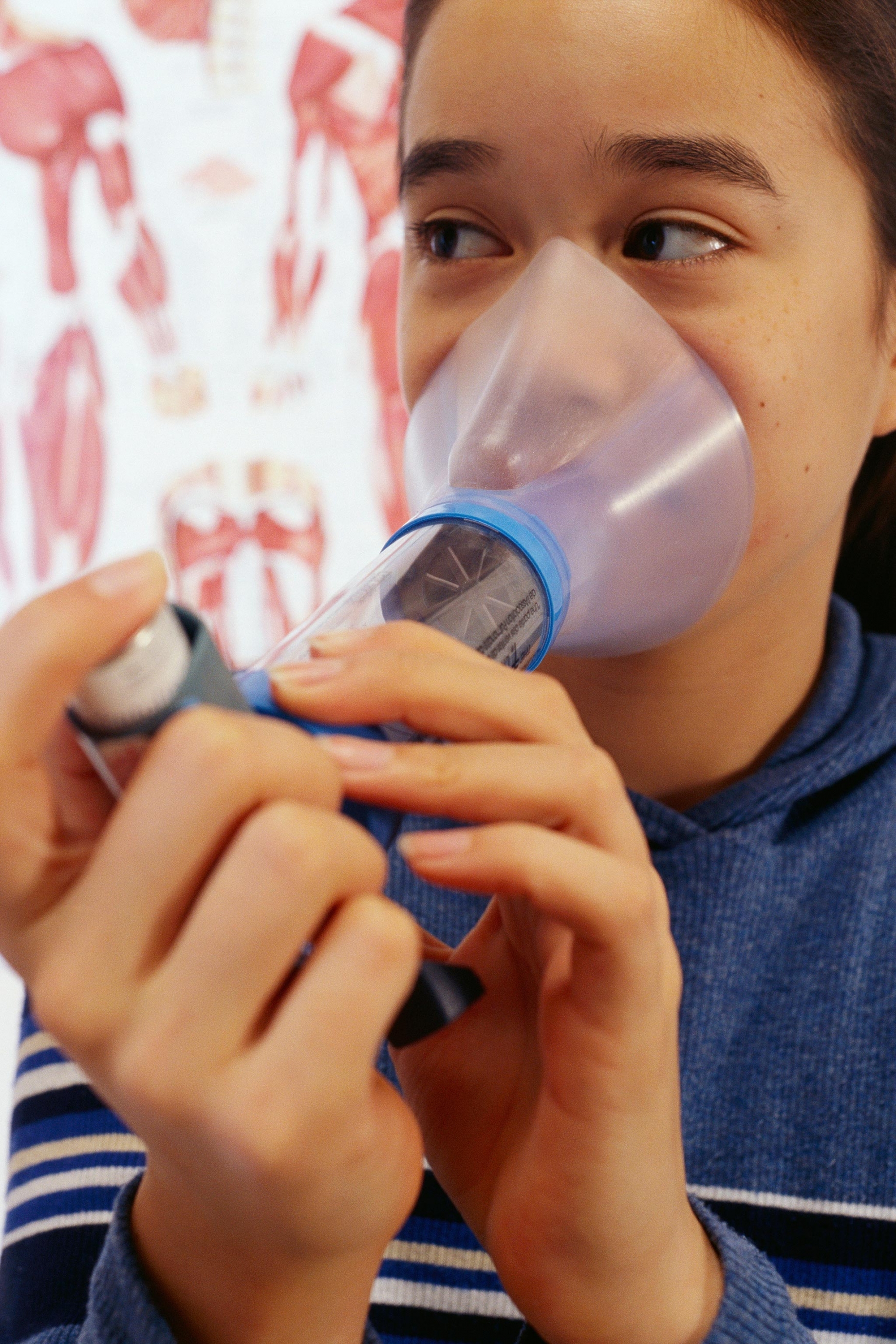
Children. Approximately nine.0% of children in the Us accept asthma. Between 2011 and 2013, rates for Black (xv.3%) and Hispanic (8.six%) children were college than the rate for White (vii.viii%) children.30 Rates of asthma were likewise higher in poor children who live below 100% of the poverty level (12.iv%).30
Not-Hispanic Blacks. In 2014, the percentage of not-Hispanic Blacks of all ages who were described equally persons in off-white or poor health totaled 14.3% as compared to viii.7% for Whites. Health risk factors for this population include loftier rates of smoking, obesity, and
Hispanics. The percentage of Hispanics of all ages who were described as persons in fair or poor health totaled 12.7% in 2014. Health disparities for Hispanics include moderately higher rates of smoking in adults, low nascence weights, and infant deaths.xxx
The impacts of climate change may worsen these wellness disparities by exacerbating some of the underlying atmospheric condition they create. For instance, disparities in life expectancy may be exacerbated by the effects of climate change related rut and air pollution on minority populations that take college rates of hypertension, smoking, and diabetes. Conversely, public health measures that reduce disparities and overall rates of illness in populations would lessen vulnerability to worsening of health condition from climate change furnishings.
Table 1.one: Current estimates and hereafter trends in chronic wellness atmospheric condition that collaborate with the wellness risks associated with climatic change
Click on a tabular array row for more information.
| | Electric current Estimates | Future Trends | Possible Influences of |
|---|---|---|---|
| ALZHEIMER'Due south DISEASE | Approximately v million Americans over 65 had Alzheimer'south disease in 2013.34 | | Persons with |
| | Average asthma prevalence in the U.Southward. was higher in children (9% in 2014)thirty than in adults (7% in 2013).35 Since the 1980s, asthma prevalence increased, but rates of asthma deaths and infirmary admissions declined.36 , 37 | Stable | Asthma is exacerbated by changes in pollen season and allergenicity and in exposures to air pollutants affected by changes in temperature, humidity, and wind.29 |
| | In 2012, approximately vi.3% of adults had COPD. Deaths from chronic lung diseases increased past 50% from 1980 to 2010.38 , 39 | Chronic | COPD patients are more than sensitive than the general population to changes in ambient air quality associated with climatic change. |
| | In 2012, approximately ix% of the total U.South. population had diabetes. Approximately 18,400 people younger than age twenty were newly diagnosed with blazon one diabetes in 2008–2009; an additional 5,000 were diagnosed with type two. twoscore | New diabetes cases are projected to increase from about 8 cases per i,000 in 2008 to well-nigh 15 per 1,000 in 2050. If recent increases keep, prevalence is projected to increment to 33% of Americans by 2050. 41 | Diabetes increases |
| | Cardiovascular disease ( | By 2030, approximately 41% of the U.S. population is projected to have some form of CVD.43 | Cardiovascular affliction increases sensitivity to heat stress. |
| MENTAL Disease | | By 2050, the total number of U.S. adults with depressive disorder is projected to increase past 35%, from 33.9 million to 45.8 million, with those over age 65 having a 117% increment. 44 | Mental illness may impair responses to |
| | In 2009–2010, approximately 35% of American adults were obese.32 In 2012, approximately 32% of youth (aged 2–nineteen) were overweight or obese.46 , 47 | Past 2030, 51% of the U.S. population is expected to exist obese. Projections suggest a 33% increase in obesity and a 130% increase in severe obesity.48 | Obesity increases sensitivity to high ambience temperatures. |
| | Approximately eighteen.7% of the U.S. population has a disability. In 2010, the percentage of American adults with a disability was approximately 16.six% for those age 21–64 and 49.eight% for persons 65 and older. 49 | The number of older adults with activeness limitations is expected to grow from 22 meg in 2005 to 38 1000000 in 2030.50 | Persons with disabilities may observe it difficult to respond when evacuation is required and when in that location is no available ways of transportation or easy get out from residences. |
i.4 Quantifying Wellness Impacts
For some changes in exposures to

The power to quantify many types of health impacts is dependent on the availability of information on the baseline
Information on trends in underlying health or background rates of health impacts is summarized in Section ane.3, "Our Changing Health." Data on the incidence and prevalence of health conditions are obtained through a complicated system of state- and metropolis-level
Characterizing sure types of climate change related exposures can exist a challenge. Exposures can consist of temperature changes and other
Modeling Approaches Used in this Study
Four capacity inside this cess—Ch. 2: Temperature-Related Death and Affliction, Ch. 3: Air Quality Impacts, Ch. 5: Vector-Borne Diseases, and Ch. six: H2o-Related Illness—include new peer-reviewed, quantitative analyses based on modeling. The analyses highlighted in these capacity mainly relied on climate model output from the Coupled Model Intercomparison Projection Phase v (CMIP5). Due to express data availability and computational resources, the studies highlighted in the iv capacity analyzed only a subset of the full CMIP5 dataset, with virtually of the studies including at to the lowest degree one analysis based on RCP6.0, an upper midrange greenhouse gas concentration pathway, to facilitate comparisons beyond chapters. For example, the air quality analysis examined results from two unlike RCPs, with a unlike climate model used for each, while the waterborne analyses examined results from 21 of the CMIP5 models for a single
Adverse wellness furnishings attributed to climate alter can have many economic and social consequences, including straight medical costs, work loss, increased care giving, and other limitations on everyday activities. Though economic impacts are a crucial component to agreement risk from climate change, and may take important direct and secondary impacts on man wellness and well-being by reducing resources available for other preventative wellness measures, economic valuation of the health impacts was not reported in this cess.
Doubtfulness in Health Impact Assessments
Figure 1.6 illustrates unlike sources of uncertainty along the exposure pathway.
Figure 1.vi: Sources of Uncertainty
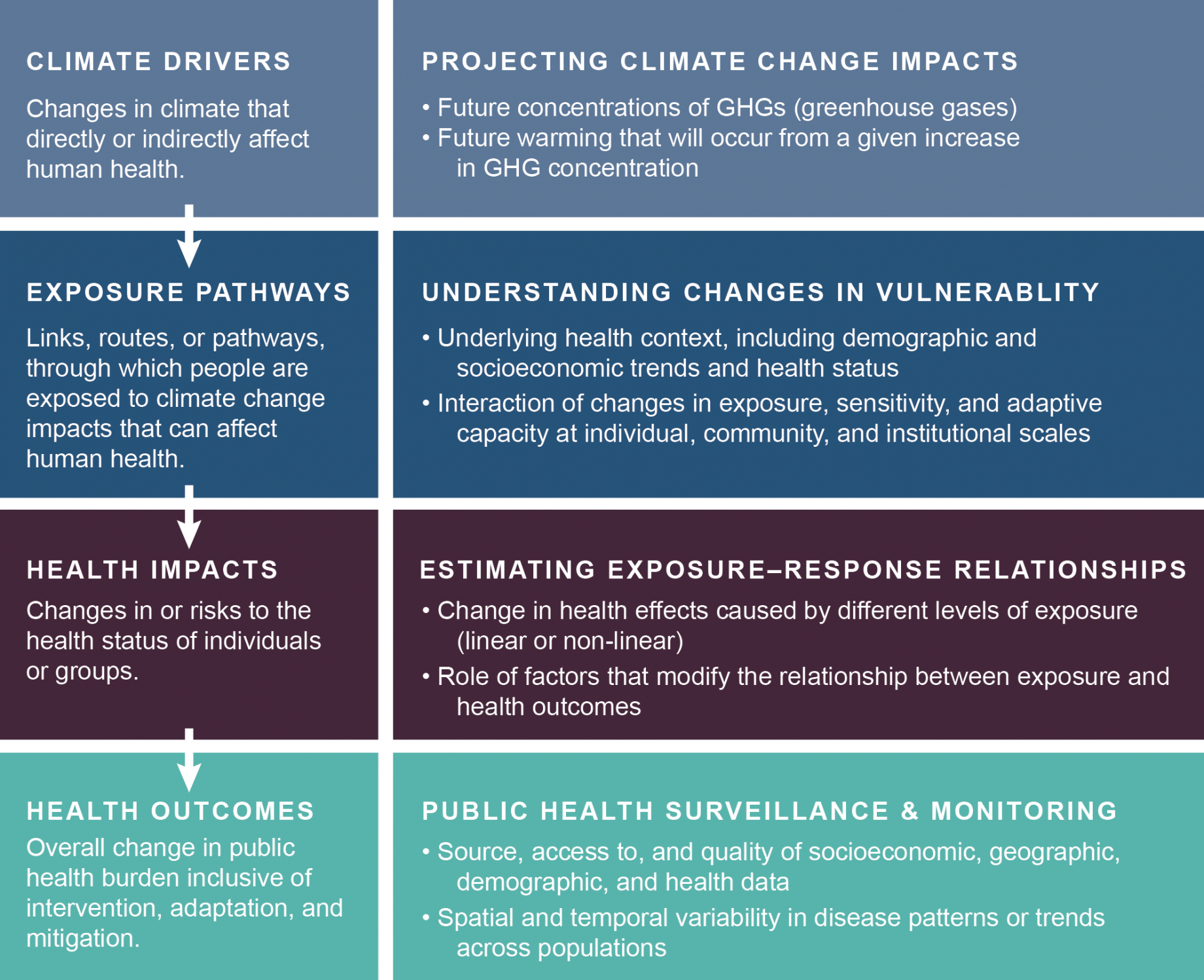
Examples of sources of
in projecting impacts of
on human
. The left column illustrates the
pathway through which climate change can affect human health. The correct column lists examples of key sources of uncertainty surrounding effects of climate alter at each stage forth the exposure pathway.
Two of the central uncertainties in projecting future global temperatures are ane) uncertainty about future concentrations of
Uncertainty in electric current and time to come estimates of wellness or
The factors related to uncertainty in exposure–response functions are similar to those for the projections of health or socioeconomic status. Estimates are more than uncertain for smaller subpopulations, less-prevalent health conditions, and smaller geographic areas. Because these estimates are based on observations of real populations, their validity when practical to populations in the hereafter is more uncertain the further into the time to come the awarding occurs. Incertitude in the estimates of the exposure–outcome relationship also comes from factors related to the scientific quality of relevant studies, including appropriateness of methods, source of data, and size of report populations. Expert judgment is used to evaluate the validity of an private study besides as the collected group of relevant studies in assessing doubt in estimates of exposure–outcome relationships.
Approach to Reporting Uncertainty in Fundamental Findings
Despite the sources of uncertainty described above, the electric current state of the science allows an exam of the likely direction of and trends in the health impacts of climate change. Over the past x years, the models used for climate and health assessments take become more than useful and more than authentic (for example, Melillo et al. 2014).6 , 53 , 54 This assessment builds on that improved capability. A more detailed discussion of the approaches to addressing doubt from the diverse sources can be found in the Guide to the Report and Appendix 1: Technical Back up Document.
Two kinds of linguistic communication are used when describing the uncertainty associated with specific statements in this report: confidence linguistic communication and likelihood language (see beneath). Confidence in the validity of a finding is expressed qualitatively and is based on the blazon, amount, quality, strength, and consistency of evidence and the degree of adept agreement on the finding. Likelihood, or the projected probability of an impact occurring, is based on quantitative estimates or measures of uncertainty expressed probabilistically (in other words, based on statistical assay of observations or model results, or on expert judgment). Whether a Central Finding has a confidence level associated with it or, where findings can be quantified, both a confidence and likelihood level associated with it, involves the proficient assessment and consensus of the chapter author teams.
Likelihood and Conviction Level
Likelihood
| Very Probable ≥9 in 10 | Likely ≥2 in iii | As Probable as Not ≈ 1 in 2 | Unlikely ≤ 1 in 3 | Very Unlikely ≤i in 10 |
Confidence Level
Very High Strong bear witness (established theory, multiple sources, consequent results, well documented and accepted methods, etc.), high consensus
Loftier Moderate bear witness (several sources, some consistency, methods vary and/or documentation limited, etc.), medium consensus
Medium Suggestive show (a few sources, limited consistency, models incomplete, methods emerging, etc.), competing schools of idea
Low Inconclusive evidence (limited sources, extrapolations, inconsistent findings, poor documentation and/or methods not tested, etc.), disagreement or lack of opinions among experts
References
Source: https://health2016.globalchange.gov/climate-change-and-human-health
0 Response to "discuss how globalization impacts human health and what factors contribute to these changes"
Post a Comment